Combat sports in Doha have moved past the boutique kickboxing fad. A decade ago, finding authentic grappling or real cage work meant knowing someone with a garage mat in Abu Hamour or digging through private compounds. Today, Qatar has evolved into a legitimate regional combat hub, anchored by authentic Brazilian Jiu-Jitsu black belts, professional fight teams, and purpose-built facilities spanning from Lusail down to Al Rayyan.
Yet, the gym culture on the ground is starkly divided. On one end, you have commercial clubs marketing martial arts as calorie burners. On the other, you find hardcore mats where everyday professionals, regional competitors, and lifelong practitioners choke and strike each other in high-intensity, air-conditioned rooms. If you want to train for real, here is what you need to know about navigating Doha's combat sports scene.
The Brazilian Jiu-Jitsu Landscape: Gi, No-Gi, and Mat Culture
BJJ is arguably the fastest-growing discipline in Qatar. The technical, problem-solving nature of the gentle art appeals heavily to Doha’s expat professionals and Qatari locals alike. Unlike striking arts, where concussions remain a continuous risk, Jiu-Jitsu lets you spar at close to 100 percent intensity without taking hits to the head.
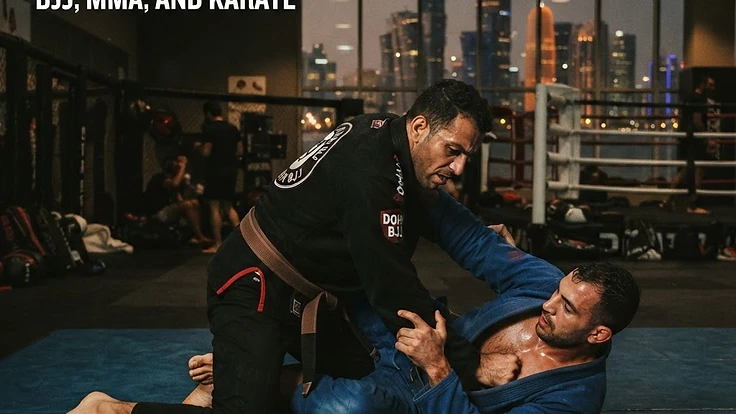
Academy culture here largely mimics the lineage-heavy schools found in Rio de Janeiro, Southern California, or Abu Dhabi. Dedicated academies like Qatar MMA in Abu Hamour have spent years building technical mats, running Gi and No-Gi rosters stacked with active competitors. The vibe on these mats is fraternal and meritocratic; nobody cares what car you drive when you are pinned under someone's knee-on-belly.
For those living or working around the northern districts who want structured combat programming alongside world-class strength floors, modern mega-facilities provide an accessible gateway. Training centers like View UFC Gym (The Pearl Qatar) on Fitseeka → at 04 Mall feature dedicated Brazilian Jiu-Jitsu programmes led by black-belt coaches, balancing technical self-defence fundamentals with high-rep positional sparring.
MMA and Cage Work: Beyond Fitness Kickboxing
Doha's mixed martial arts landscape has evolved far beyond cardio bag sessions. MMA requires blending striking, wrestling, wall work, and submissions, and very few spots offer all pieces under one roof. When evaluating an MMA gym in Doha, you have to look closely at the coaching roster. A pure kickboxing instructor cannot teach you how to defend a single-leg takedown against the cage.
If your goal is functional combat training with full cage access, look for facilities that house legitimate Octagons and separate their fitness enthusiasts from live sparring sessions. For central and southern Doha residents, View UFC Gym Qatar (Society) on Fitseeka → gives athletes the dedicated cage space and combat class structure necessary to transition from fundamentals to tactical sparring.
Further west toward Al Rayyan, seasoned strikers and grapplers often cross-train in hard-nosed strength and conditioning spots. Facilities like View VIP Gym on Fitseeka → cater to lifters and combat athletes alike, giving those who train MMA and boxing the raw iron environment needed to build genuine fight conditioning and explosive power.
Striking and Traditional Arts: Muay Thai, Boxing, and Karate
While submission grappling takes up plenty of local headlines, striking arts maintain deep roots in Qatar. Traditional karate dojos have served local families and school-age students across Freej Bin Mahmoud, Al Sadd, and Mansoura for decades. These traditional hubs prioritize discipline, forms (kata), and point sparring—ideal for youth development and baseline mobility.
However, if your ambition is practical striking, Muay Thai and classical Western boxing are the arts dominating adult routines. Authentic striking demands heavy pad rounds, technical Dutch drilling, and supervised sparring. Up in the northern hub of Fox Hills and the Marina district, modern athletes look to hybrid spaces like View Gymmito Fitness Club (Lusail) on Fitseeka →, which bridges technical combat coaching—spanning MMA and boxing—with tailored athletic conditioning, sparing you the rush-hour crawl on the Lusail Expressway.
Practical Doha Realities: Schedules, Heat, and Etiquette
Training martial arts in Qatar comes with distinct local factors that newcomers often overlook:
- The Evening Rush: Prime training hours peak between 6:30 PM and 9:00 PM. Traffic bottlenecks along the D-Ring Road, Salwa Road, or the Pearl gateway mean your commute dictates your consistency. Choose a gym close to home or work; a world-class academy 45 minutes away in peak traffic is a gym you will stop visiting by month two.
- Seasonal Air Conditioning: From May to October, outdoor cardio is off the table. Indoor combat gyms run AC units hard, but crowded mats generate heavy humidity. Bring at least two clean rashguards to class, stay on top of your electrolytes, and wash your Gi immediately after training to prevent bacterial buildup.
- Ladies-Only Mats: Qatar offers some of the most comprehensive female combat setups anywhere in the GCC. Many major academies feature dedicated, fully screened female-only training areas with qualified female instructors across BJJ, karate, and Muay Thai, ensuring full privacy without compromising instructional quality.
- Mat Hygiene: Ringworm and staph infections will ruin any team. Never step off the mat barefoot into the locker room, keep your nails clipped short, and never train with open scratches or skin lesions. Respect the academy rules and your training partners.
How to Pick Your Gym
Avoid locking into annual contracts based purely on sleek social media feeds. Walk in, watch the advanced class, and check the mats. Are students tapping early and looking out for one another, or is the room full of reckless ego? A legitimate combat gym in Doha prioritizes clean technique, clear communication, and safe, scalable progression. Pick a gym that matches your physical goals, step onto the mats, and check your ego at the door.