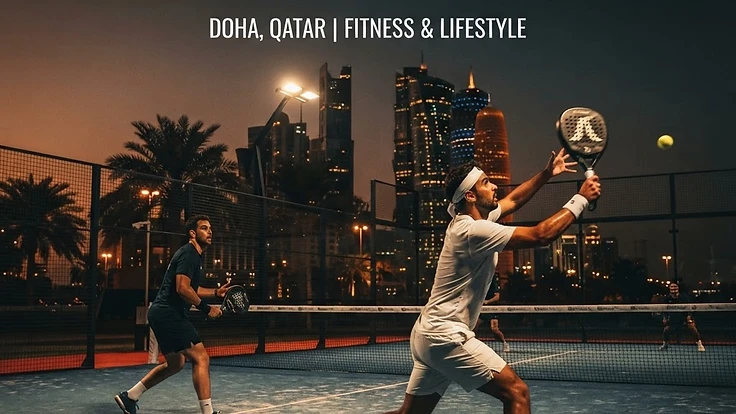
Walk past an outdoor court in Lusail on a balmy February evening or peer into the massive indoor arenas in Aspire Zone, and the picture is the same: four players locked into rapid-fire rallies, the distinct hollow pop of carbon-fibre racquets echoing against tempered glass walls. A decade ago, mention of padel in Doha was met with blank stares. Today, securing a 60-minute prime slot on Playtomic between 7:00 p.m. and 10:00 p.m. requires fast reflexes.
The Trajectory: From Curiosity to Cultural Phenomenon
Padel first gained serious traction in Qatar around 2017, propelled largely by former national tennis players looking for a dynamic alternative. When media figure and ex-national tennis athlete Mohammed Saadon Al Kuwari helped co-found PADEL IN, the spark caught fire. Qatar quickly evolved into a global hub for the sport, hosting major milestones like the World Padel Championship and the annual Ooredoo Qatar Major Premier Padel at Khalifa International Tennis & Squash Complex.
Today, the International Padel Federation ranks Qatar among the world leaders in competitive points across Asia, but the real momentum sits at the grassroots level. Over 150 courts and dozens of dedicated venues span Doha, Lusail, Al Wakrah, and beyond. What began as a game played by ex-racquet athletes has become a national pastime that cuts across nationalities, age groups, and fitness backgrounds.
Why Doha Fell for the Glass Cage
Padel’s explosion across the Gulf is not an accident of marketing; it is a direct match for local lifestyle and climate dynamics:
- Low Barrier to Entry: Traditional tennis requires months of technical coaching before two beginners can sustain a five-stroke rally. Padel uses smaller solid racquets without strings, a depressurised ball, and an underhand serve. Novices can hold entertaining, competitive rallies inside thirty minutes.
- The Social Blueprint: Played almost exclusively in doubles, padel is inherently conversational. You are locked in a compact 10x20-metre court with three other people. The proximity keeps bantering high and dead time low. It bridges post-work socializing and active recreation better than almost any other format.
- Summer Proofing: When Doha’s summer temperatures push past 40°C, outdoor workouts collapse. Padel adapted instantly. Expansive indoor air-conditioned facilities—from PADEL IN Aspire to The Dome at Education City—mean you can run full-intensity matches in sub-24°C comfort in July.
Where to Play: Mapping Doha’s Best Venues
Whether you live in West Bay, Al Sadd, or The Pearl, finding a court is rarely an issue of distance—it is an issue of timing. Venues across town cater to different playing styles:
- PADEL IN (Aspire Zone & City Center Doha): The Aspire flagship is among the largest indoor padel hubs in the region, boasting 13 indoor courts where you will find both local tournament regulars and intermediate weekend groups.
- The Dome Padel Club (Education City): Set inside Qatar Foundation’s sprawling sports grounds, The Dome delivers professional European coaching programmes, structured tournaments, and excellent modern indoor infrastructure.
- Resort & Boutique Setups: For those who prefer a club setting with full wellness facilities attached, luxury properties like View Al Messila Health Club on Fitseeka → provide an integrated environment where a hit on the court can be paired with pool recovery, cryotherapy, or gym work.
- Urban Rooftops & Standalones: From outdoor set-ups around Doha Oasis near Msheireb to dedicated courts across Lusail and Katara Cultural Village, you will find options for breezy winter evenings under floodlights.
Padel Fitness: The Hidden Demands on Your Body
Because padel is accessible, newcomers frequently mistake it for an easy jog. It isn't. The game relies heavily on explosive lateral shuffles, abrupt deceleration, rotational core torque, and sudden directional changes off the glass rebounds. If your baseline conditioning is lacking, your knees, achilles tendons, and lower back will quickly register the deficit.
Serious players who want to maintain high court intensity without injury build their engine off the court. High-intensity group workouts at studios like View F45 Training Sports City on Fitseeka → mirror the quick-burst anaerobic intervals required in padel points. Similarly, full-scale strength facilities such as View M Active Club on Fitseeka → offer the space, resistance equipment, and functional setups needed to strengthen glute stabilizers, shoulders, and wrists.
To safeguard against the repetitive asymmetrical loading of one-handed racquet play, functional mobility and posterior chain training are vital. Dedicated training environments like View Life+ Health Club on Fitseeka → help balance spinal rotation, improve hip hinge mechanics, and build single-leg stability that directly translates into faster recovery on court.
How to Get Into the Game
If you have not picked up a racquet yet, do not overcomplicate your entry:
- Download Playtomic: Almost every commercial and club court in Qatar manages bookings, match-matching, and player ranking levels through the Playtomic app. You can book private courts or enter open public matches calibrated to your self-assessed skill level.
- Rent First, Buy Later: Every venue rents carbon racquets and sells three-ball pressurised cans at reception. Play three or four sessions before spending 700 to 1,500 QAR on your own teardrop or round-head racquet.
- Get Court Shoes: Do not play in soft running trainers. Padel turf has silica sand swept into the pile. Standard running sneakers grip inconsistently and cause rolled ankles during rapid direction shifts. Buy a pair of herringbone-tread padel or clay-court tennis shoes.
- Learn to Let It Pass: The golden beginner rule: if the ball is hit hard and deep toward the back wall, do not swing early. Step out of the way, let it bounce off the back glass, and hit it on the return rebound. The moment you master the back glass, you are an intermediate.
Padel is no passing fad in Doha. It solved the city's fitness equation by making cardiovascular work social, technical, and immune to summer heat. Grab three colleagues, book a court, and let the ball hit the glass.