By mid-June, Doha's outdoor fitness scene usually retreats behind double-glazed glass. The Corniche empties out by 6:00 AM, the Lusail Marina promenade turns into an asphalt oven, and anyone still logging outdoor miles is either waking up at dawn or courting heat exhaustion. For years, summer training in Qatar meant two things: treadmill monotony or moving your cardio entirely indoors.
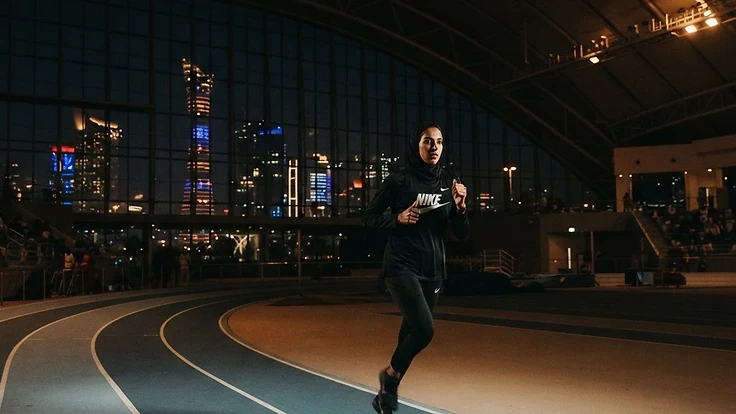
That changed when the Public Works Authority (Ashghal) began rolling out open-air, climate-controlled public tracks. What sounded like a World Cup gimmick—chilling the outdoors in a desert climate—has turned into functional, heavily used community infrastructure. If you are tired of the treadmill belt, here is how Doha's air-conditioned running loops work, what they feel like to run on, and where to go.
The Engineering: How Do You Cool an Outdoor Corridor?
Pumping cold air into open desert sky sounds like an environmental and thermodynamic nightmare. The engineering behind Qatar's cooled paths avoids this by treating the running path not as an open field, but as a microclimate trench.
Using district cooling techniques and underground air handling units (AHUs) fitted with pressure-independent control valves, chilled air is pushed out laterally through ground-level and low-wall vents along the pedestrian tunnels and path borders. Because cold air is denser than hot air, it settles directly along the running surface. Planted tree canopies, green walls, climbing vines, and shaded overhead archways prevent solar radiation from heating the track floor while keeping the cool air mass trapped between waist and head height.
The system targets a controlled temperature zone between 26°C and 28°C along the track corridor, even when ambient thermometers read 45°C. At least 60% of the energy powering key sites is offset by solar panel installations, making continuous summer operation viable.
The Tracks: Where to Run in Doha When It Sizzles
If you want to maintain your running volume without staring at a gym wall, three major parks deliver true climate-controlled laps:
- Umm Al Seneem Park (Ain Khaled / Al Rayyan): Holding the Guinness World Record for the longest air-conditioned outdoor path, Umm Al Seneem features a 1.143-kilometre cushioned pedestrian loop. The perimeter is lined with cooling vents, distance markers, and drinking stations, alongside a separate 1,135-metre bike path and outdoor workout pods.
- Rawdat Al Hamama Park (Umm Salal / North Doha): Serving residents commuting up toward Lusail and the northern districts, Rawdat Al Hamama features a sprawling climate-controlled walkway stretching roughly 1.2 kilometres, giving distance runners decent continuous mileage before having to turn around.
- Al Gharrafa Park: The pioneer of the concept in Qatar. It offers a 657-metre air-conditioned loop enveloped by tunnel-like green arches. It is shorter, making it better suited for sprint intervals, tempo sets, and recovery jogs than high-mileage marathon prep.
- Oxygen Park (Education City): While not cooled end-to-end like Umm Al Seneem, Education City’s subterranean-inspired Oxygen Park uses covered, sunken pathways and integrated cooling vents to dramatically lower the ambient temperature in its pedestrian passages.
The Reality Check: What It Actually Feels Like
Let's be direct: running on a 26°C outdoor track in July does not feel like running through the Swiss Alps. You are still in Doha, and summer humidity can linger above the cool air pool. Here is what to realistically expect when you lace up:
- The temperature gradient is real: The moment you step onto the track surface at Umm Al Seneem or Al Gharrafa, you feel a distinct drop across your lower legs and torso. Step two paces off the path onto the grass, and you are immediately hit by a wall of ambient heat.
- Air weight and humidity: The systems drop the heat index substantially, but during peak August humidity spikes, the air can feel dense. You will still sweat, and you still need to hydrate as aggressively as you would during an indoor workout.
- Foot traffic management: Because these tracks are free and open to everyone, you share the path with casual walkers, families, and strollers. If you plan to run tempo intervals, go either early in the morning (before 8:00 AM) or after 9:30 PM to avoid dodging foot traffic.
Balancing Cooled Tracks with Structured Gym Work
Cooled tracks solve the cabin-fever problem of the Gulf summer, but they are only one tool. Running continuous laps on a 650-metre to 1.1-kilometre loop can get monotonous, and track work alone will not build the core stability or upper-body strength needed for injury-free endurance.
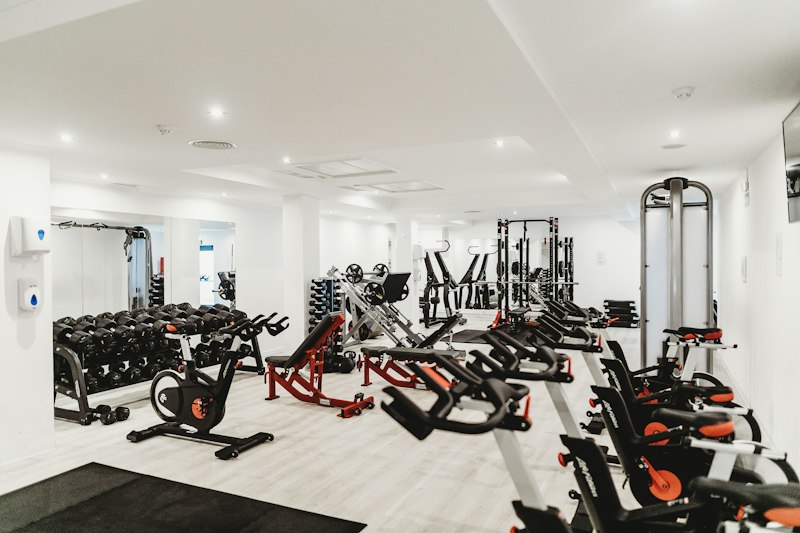
For structured speed conditioning, sprint intervals, and high-intensity volume, look into local studios like View F45 Training Sports City on Fitseeka → to build cardiovascular endurance in fully controlled environments. If you want to complement outdoor mileage with barbell work, targeted Hyrox station training, and metabolic conditioning, View Pulso Fitness on Fitseeka → gives athletes a dedicated space for heavy functional work.
Female runners in the Al Rayyan and Aspire vicinity who want dedicated strength, yoga, or indoor swimming sessions to support their road training can also check out View Aspire Active Ladies on Fitseeka →. And for low-impact recovery—particularly deep-tissue mobility work, hot/cold contrast therapy, and guided reformer Pilates—a facility like the View Mandarin Oriental Fitness Center on Fitseeka → in Msheireb Downtown provides high-tier recovery setups.
The Verdict
Qatar's air-conditioned tracks are not a gimmick—they are a legitimate sanity-saver for local runners between May and October. They will not replicate a cool autumn morning along the Corniche, but they eliminate the 45°C barrier that used to force every athlete indoors. Time your sessions right, bring your water bottle, and you can keep your road shoes moving all summer long.