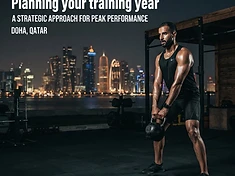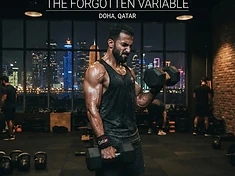

Walk into any high-end gym in West Bay or Lusail on a weekday evening, and you will see athletes chasing recovery with aggressive urgency. Between infrared saunas, cryotherapy chambers, and handfuls of ibuprofen, the modern fitness community has declared an all-out war on inflammation. It feels intuitive: you train hard, your muscles ache, and you want to numb the swelling so you can hit your numbers again tomorrow. But sports science tells a very different story. Inflammation is not an error your body makes; it is the fundamental signal that drives muscular adaptation, strength gains, and tissue repair. If you blunt it completely, you blunt your progress.
The Two Faces of Post-Workout Inflammation
To train effectively in Doha's demanding climate, you have to distinguish between acute and chronic inflammation. Acute inflammation is the targeted, temporary response to exercise-induced muscle damage. When you grind out heavy squats or sprint along the Doha Corniche at sunrise, micro-tears form in your muscle fibres. Your immune system immediately responds by flooding the tissue with neutrophils, macrophages, and signalling cytokines like interleukin-6 (IL-6). These cells clean up cellular debris and initiate protein synthesis. Without this inflammatory cascade, satellite cells are not recruited to repair the tissue, meaning your muscles will not grow back stronger or denser.
The trouble begins when acute inflammation fails to resolve and morphs into systemic, low-grade chronic inflammation. In Doha, this rarely happens solely because of your barbell program. It happens when high training volume collides with environmental stressors: severe summer heat, chronic dehydration from shifting between 45°C ambient air and aggressive sub-20°C indoor air conditioning, poor sleep patterns, and elevated cortisol. When inflammation becomes chronic, circulating markers like C-reactive protein (CRP) stay elevated, joint tissues degrade, hormonal production drops, and recovery stalls completely.
The Cold Plunge Trap: Why Ice Might Be Stalling Your Gains
Cold-water immersion has become the signature recovery ritual across Doha's boutique spaces. Athletes jump into 10°C water after a brutal workout because it reliably numbs delayed-onset muscle soreness (DOMS). But research shows a clear divide between how cold exposure makes you feel and what it does to your physiology. Cold water immersion constricts blood vessels, reduces local swelling, and dampens perceived soreness. However, by shutting down blood flow and suppressing pro-inflammatory signalling immediately after resistance training, regular ice baths directly attenuate muscle hypertrophy and long-term strength adaptations.
If you are training for pure strength or muscle building at facilities focused on conditioning like View Pulso Fitness on Fitseeka →, dunking yourself into an ice bath within four hours of lifting is counterproductive. You are trading long-term cellular adaptation for short-term comfort. Save cold immersion for specific scenarios: multi-event competitions where you have to perform again within hours, acute joint sprains, or survival cooling after running in blistering humidity where lowering core temperature is a medical priority.
Heat Therapy, Vasodilation, and Tissue Repair
While cold blunts the biological signals of repair, post-exercise heat exposure operates differently. Immersion in hot water or sitting in a dry sauna stimulates the production of heat shock proteins (such as HSP72), which protect cellular structures, maintain protein folding, and facilitate muscular recovery without terminating the natural adaptive response. Heat also induces significant vasodilation, driving fresh, oxygenated blood and nutrient delivery into depleted tissues.
This makes heat-based recovery particularly practical for residents whose schedules revolve around a Sunday-to-Thursday workweek. Following an intense functional training or strength session, pairing moderate mobility with thermal contrast or dedicated sauna sessions promotes tissue elasticity and parasympathetic nervous system tone. Clubs like View Al Messila Health Club on Fitseeka → provide the kind of comprehensive thermal and hydrotherapy facilities where heat application can be programmed strategically rather than treated as an afterthought.
The Gulf Climate Multiplier: Heat Stress and Systemic Load
Training in Qatar presents an environmental challenge that European and North American recovery studies rarely account for: extreme ambient heat load. Even during evening runs at Aspire Zone or early Friday morning cycles around Lusail, high humidity prevents evaporative sweat cooling. Training in high heat increases core temperature, accelerates glycogen depletion, and dramatically spikes circulating inflammatory cytokines well beyond what the same workout would produce in a climate-controlled room.
When athletes try to sustain six high-intensity sessions a week during a Doha summer, their systemic inflammatory load frequently outpaces their recovery capacity. If you step off the outdoor track in July feeling wrecked, your priority is rehydration, electrolyte replenishment, and bringing core temperature down gradually. Hydration is an anti-inflammatory tool: even mild hypohydration increases blood viscosity, impairs nutrient delivery to healing muscle beds, and prolongs elevated CRP levels.
Active Recovery Over Passive Numbing
If ice baths and over-the-counter anti-inflammatories like ibuprofen are not the daily answer, what actually clears chronic metabolic waste without shutting down adaptation? Systematic reviews consistently identify active recovery, compression, and therapeutic massage as the most reliable methods for clearing fatigue and reducing DOMS without blunting the cellular signalling necessary for hypertrophy.
Light aerobic work—such as an easy 20-minute spin on an air-conditioned stationary bike, a low-intensity swim, or an easy mobility flow—pumps lymphatic fluid and stimulates blood flow without inducing further mechanical trauma. Dedicated wellness destinations such as View Mandarin Oriental Fitness Center on Fitseeka → in Msheireb or View Life+ Health Club on Fitseeka → integrate functional spaces with restorative training like Pilates and mindful movement, offering an ideal environment to move blood without adding muscular damage.
Building a Practical Doha Recovery Routine
Managing inflammation effectively comes down to timing your interventions rather than eliminating the inflammatory response entirely:
- Ditch prophylactic NSAIDs: Never take ibuprofen or naproxen before or immediately after training to "prevent soreness." It inhibits cyclooxygenase (COX) enzymes, blunting protein synthesis and gut barrier integrity.
- Time your cold exposure: If your goal is hypertrophy or absolute strength, keep cold-water immersion at least 4 to 6 hours away from your lifting sessions, or reserve it for non-training recovery days.
- Prioritise anti-inflammatory nutrition: Combat systemic inflammation through your plate. High-purity omega-3 fatty acids (EPA/DHA), tart cherry juice, and polyphenol-dense whole foods provide your body with the biochemical tools to resolve acute inflammation naturally.
- Respect the Friday reset: The traditional Friday-Saturday Gulf weekend offers a natural window to decompress. If you train hard Sunday through Thursday, use your weekend for restorative movement, extended thermal sessions, and extra sleep rather than two consecutive days of max-effort punishment.
The Bottom Line
Inflammation is not your enemy. It is the biological currency you pay for building a stronger, more resilient body. The goal is never to extinguish the fire entirely—it is to let acute inflammation do its repair work without letting systemic stress burn down your engine. Learn to tolerate the natural ache of adaptation, protect your sleep, respect Doha's brutal climate, and let your body's built-in biology do the job it evolved to do.