Tucked into the southern flank of Al Rayyan, just past the sprawl of Villaggio, sits a 2.5-square-kilometer machine that changed how tiny nations think about global athletics. It is called Aspire Zone. If you live anywhere between West Bay, The Pearl, and Al Wakrah, you probably see the Torch Doha towering on the horizon every week. You might run laps around Aspire Park’s rubberized loop on winter evenings or take the family for a walk by the lake. But behind the serene manicured greens and Khalifa International Stadium operates an elite athletic engine that mirrors—and frequently outperforms—institutions like the US Olympic & Paralympic Training Center in Colorado Springs and France’s INSEP outside Paris.
The Triad: Academy, Aspetar, and Infrastructure
Olympic training hubs around the world generally solve one problem: they centralize raw talent, specialized recovery, and hyper-specific conditioning under a single administrative roof. INSEP built that ecosystem in the Vincennes forest for French judokas and track stars; Colorado Springs banked on high altitude and centralized USOPC sports science. Aspire Zone did something bolder in 2004: it built a completely integrated sports city from scratch.
The machine runs on three core pillars governed by the Aspire Zone Foundation:
- Aspire Academy: A dedicated secondary school and sporting development system designed to scout and develop athletic potential through sports psychology, biomechanics, biochemistry, and physiology.
- Aspetar: An IOC-accredited Research Centre for Prevention of Injury and Protection of Athlete Health, and the premier orthopedic and sports medicine hospital in the Middle East. Elite Premier League footballers, track phenoms, and tennis champions quietly land at Hamad International Airport just to rehab their ACLs and hamstrings here.
- Aspire Logistics & Facilities: Operators of the Aspire Dome—the world’s largest indoor multi-purpose sports dome—alongside the Hamad Aquatic Center, specialized altitude dormitories, and climate-controlled environmental chambers.
Engineering Mutaz Barshim: Elite Track & Field Science
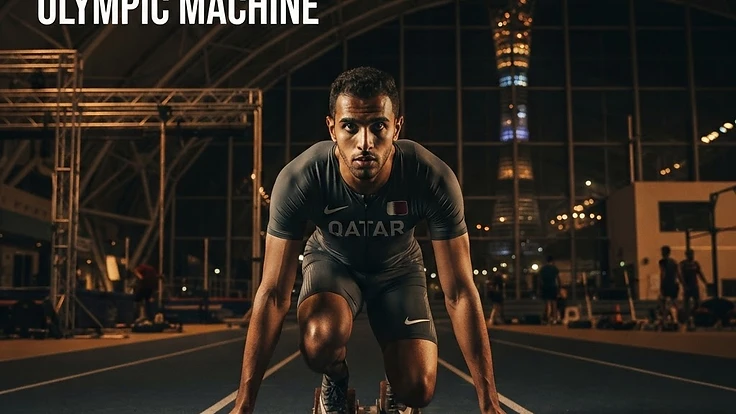
You cannot talk about Aspire without mentioning Mutaz Essa Barshim. Qatar’s Olympic high jump champion and multi-time world champion did not happen by accident. He is the ultimate case study of the Aspire system: identified early, developed through integrated biomechanical feedback, and kept structurally sound by Aspetar’s clinical team through career-threatening ankle injuries.
Inside the Academy’s biomechanics labs, high-speed motion capture tracks ground-reaction force down to the millisecond. If an athlete loses 3% of takeoff velocity due to hip angle fatigue, coaches do not guess—the data surfaces immediately on analytical dashboards. It is the exact approach that led Qatar’s men’s national football team to lift the AFC Asian Cup, stacked with graduates who grew up together within this exact ecosystem.
The Doha Climate Factor: Environmental Chambers & Indoor Ecosystems
Training in Doha presents a reality that neither Colorado nor Paris has to manage: four to five months of punishing Gulf heat and humidity. Outside of air-conditioned tracks, outdoor summer conditioning can break an athlete if mismanaged.
Aspire tackled this challenge head-on. Beyond the massive indoor microclimate of the Aspire Dome, the campus houses specialized environmental chambers that simulate extreme heat, variable humidity, and hypoxic altitude conditions up to several thousand meters above sea level. Visiting endurance athletes from Europe and Africa regularly book training camps here before major championships because they can control every variable in an environment immune to the Doha summer.
Bridging Elite Science to Community Training
The true measure of a national sports complex is not just whether it produces Olympic hardware, but whether its high-performance methodology filters down to everyday residents grinding through their workweeks in Msheireb or Lusail.
Aspire does not keep all its doors locked. The community fitness programming built around the campus provides functional conditioning, swimming, and mobility work led by international-caliber coaches. For female athletes and everyday trainees looking for structured, private programming with direct access to Aspire’s coaching philosophy, the ladies-only facility is unmatched.
View Aspire Active Ladies on Fitseeka →
This ecosystem has created a ripple effect across Doha’s broader private fitness market. Coaches who trained within Aspire’s network have migrated into boutique facilities, raising the baseline standard of strength and conditioning across the peninsula.
Where Serious Trainees Go for Aspire-Level Intensity
If you cannot train inside the Olympic Academy itself, you have to find spaces that mirror its relentless focus on load management, barbell mechanics, and functional capacity. Fortunately, Doha’s private strength landscape has stepped up over the past decade.
Right in the shadow of the Dome, trainees looking for Olympic weightlifting, gymnastics progressions, and high-cadence metabolic conditioning turn to specialized boxes designed for raw work capacity:
View CrossFit Aspire on Fitseeka →
For those located slightly deeper in Al Rayyan who care less about corporate frills and more about heavy compound lifts, periodized hypertrophy, and direct strength programming, traditional iron houses provide the necessary antidote to commercial fitness chains:
View Spartans Elite Fitness Gym on Fitseeka →
Meanwhile, if you are drawn to the emerging international wave of hybrid athletic racing and endurance testing, Doha offers modern conditioning hubs built explicitly for competition prep, functional circuits, and structural core work:
View Pulso Fitness on Fitseeka →
What Everyday Doha Athletes Should Take Away
You don't need a biomechanics PhD tracking your ankle dorsiflexion to benefit from what Aspire Zone has proved over the last twenty years. The principles that build an Olympic high jumper are identical to the principles that will keep you functional, injury-free, and strong while navigating life in Qatar:
- Measure what matters: Stop guessing your working weights and weekly cardio mileage. Track your lifts, watch your recovery heart rate, and audit your sleep during shifting work schedules.
- Prioritize prehab like Aspetar: Most recreational athletes in Doha get hurt because they sit in air-conditioned offices all day, drive through Doha expressway traffic, and then immediately try to max out their deadlift. Spend ten minutes mobilizing your hips and thoracic spine before touching a barbell.
- Respect the Gulf climate: Manage your hydration, program intense sessions indoors when wet-bulb temperatures spike in July, and save outdoor tempo work on the Corniche for the cool winter stretch.
The Verdict
Aspire Zone is not a cosmetic monument; it is one of the most sophisticated athletic machines ever engineered. Whether you walk its perimeter paths or train in private strength boxes across the city, the standard it set is clear: performance is not an accident—it is a system.