The Rise of High-Tech Recovery Along the Corniche
Training in Doha demands a brutal reckoning with your physiology. When summer temperatures hover around 45°C and indoor AC runs around the clock, systemic fatigue hits differently than in cooler climates. You leave the turf feeling completely drained, your nervous system takes longer to down-regulate, and delayed onset muscle soreness (DOMS) lingers for days. Naturally, the wellness industry responded. Cryotherapy chambers, boutique IV lounges, infrared saunas, and red light pods have multiplied from The Pearl-Qatar to Lusail and West Bay.
Biohacking has firmly transitioned from elite athlete training camps to Doha’s everyday fitness landscape. But while booking a 10-minute deep freeze sounds advanced on Instagram, practical recovery comes down to biology, not aesthetic lighting. Let's look honestly at the science behind Doha's modern recovery modalities: what accelerates your training, what is merely relaxing, and what is just expensive marketing.
Whole-Body Cryotherapy: Vasoconstriction vs. The Hype
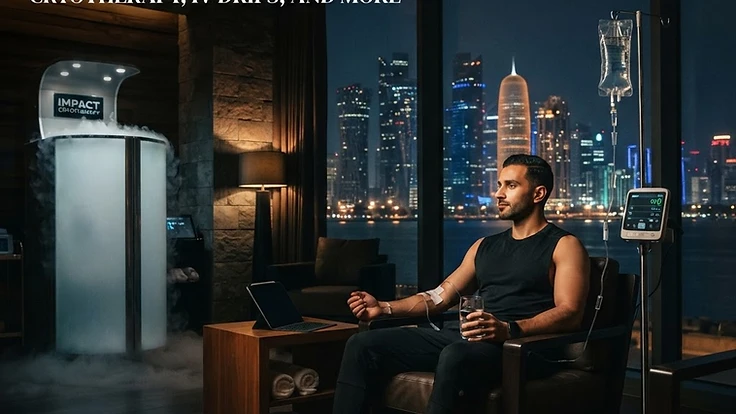
Whole-body cryotherapy exposes your skin to sub-zero vapor—typically between -110°C and -140°C—for two to three minutes. The physiological mechanism is rapid vasoconstriction. Blood rushes away from your extremities to protect core organs. Once you step out, oxygen-rich blood surges back through your tissue. Venues like Recovery Lab Qatar have made cold chambers and cold plunges accessible for everyday lifters.
The honest assessment: cryotherapy provides an immediate neurochemical kick, spiking norepinephrine and blunting pain receptors. If you have a weekend tournament or you are doing back-to-back conditioning blocks at View Spartans Elite Fitness Gym on Fitseeka →, three minutes in the freeze can numb acute joint aches and suppress systemic inflammation enough to get you moving again.
However, timing matters. If your primary goal is hypertrophy (building muscle tissue), hopping straight into a cryo chamber immediately after lifting is counterproductive. That initial inflammatory response is the primary trigger for muscle protein synthesis. Blunting it right away with cold exposure dampens the adaptive signal. Use cold immersion on rest days or several hours post-session, not two minutes after setting down a barbell.
IV Drip Lounges: Hydration Shortcut or Expensive Urine?
Medical clinics and wellness lounges across Doha, such as Eden Health Center and Wellkins Medical, heavily market intravenous vitamin drips. Formulas boast blends of B-complex vitamins, magnesium, glutathione, and saline, claiming to cure athletic fatigue, boost immunity, and fast-track rehydration.
Here is reality: IV drips bypass the gastrointestinal tract, providing 100% bioavailability. If you are clinically depleted, suffering from acute dehydration after a 15-kilometre run around Education City, or battling heat exhaustion, an intravenous saline and electrolyte infusion will restore blood volume rapidly. But if you maintain balanced micronutrient intake and hydrate properly during the day, your body simply clears excess water-soluble vitamins through your kidneys.
If you suspect severe micronutrient depletion, insist on baseline blood panels first. Spending 400 to 700 QAR on weekly boutique drips without bloodwork to confirm a clinical deficiency is an expensive way to drink water.
Contrast Therapy and Thermal Loading: Doha's Strongest Tool
While nitrogen chambers grab headlines, contrast therapy—cycling between deliberate heat exposure and cold water—remains the most scientifically grounded biohack available in Qatar. Deliberate heat via traditional Finnish or infrared saunas triggers heat shock proteins, enhances nitric oxide production, and mimics low-intensity cardiovascular work. Following a sauna with a 10°C cold plunge triggers rapid vascular pumping.
High-end wellness spaces like the View Mandarin Oriental Fitness Center on Fitseeka → in Msheireb Downtown integrate thermal suites and temperature-controlled hydrotherapy pools. This setup offers direct parasympathetic nervous system recovery, lowering resting heart rate and improving heart rate variability (HRV) after heavy training weeks.
Pneumatic Compression Boots: Useful Flush or Passive Rest?
Walk into any dedicated recovery hub in Lusail and you will see athletes lounging on recliners wearing full-length pneumatic sleeves. Compression boots rhythmically inflate from feet to hips, mimicking the body's muscle pump to encourage lymphatic drainage and venous return.
The science shows clear benefits: pneumatic compression accelerates the clearance of blood lactate and significantly lowers subjective feelings of muscle soreness within 24 to 48 hours. If you are training high-volume functional fitness at View Pulso Fitness on Fitseeka → or pacing yourself through metabolic intervals at View F45 Training Sports City on Fitseeka →, spending 20 minutes in compression sleeves helps restore heavy legs.
Just understand the mechanism: compression boots do not rebuild torn muscle fibers. They clear fluid accumulation and speed up tissue circulation. Elevating your legs against a wall and doing light active recovery on an air bike accomplishes 70% of the same physiological outcome, but the boots let you read or rest completely while the mechanical gradient does the work.
Building a No-Nonsense Doha Recovery Protocol
No biohack can overcome five hours of disrupted sleep, chronic under-eating, and poor daily hydration. If you want to use Doha's recovery facilities effectively without throwing riyals away, structure your regimen around these clear rules:
- Hydrate for the environment first: Drink water mixed with sodium, potassium, and magnesium daily to counteract sweat loss in Doha's humidity before considering an IV clinic.
- Reserve cryotherapy for deloads or joint pain: Keep whole-body cold therapy for high-volume phases or acute soreness rather than post-hypertrophy lifting sessions.
- Prioritize thermal contrast: Use sauna and cold plunge cycles once or twice weekly to improve sleep architecture and down-regulate sympathetic stress.
- Protect your sleep environment: Indoor air conditioning, blacked-out blinds, and uninterrupted 8-hour sleep cycles rebuild tissue faster than any recovery boutique chamber.
The Bottom Line
Doha's recovery ecosystem offers genuine physiological tools alongside plenty of marketing spectacle. Use compression boots when your legs are hammered from volume, use cold water deliberately when systemic inflammation is dragging you down, and get your blood tested before booking an IV chair. But never mistake high-tech gadgets for the foundational recovery work: sleep deep, hydrate with real electrolytes, eat enough protein, and let your body adapt.