The Quiet Mat Boom
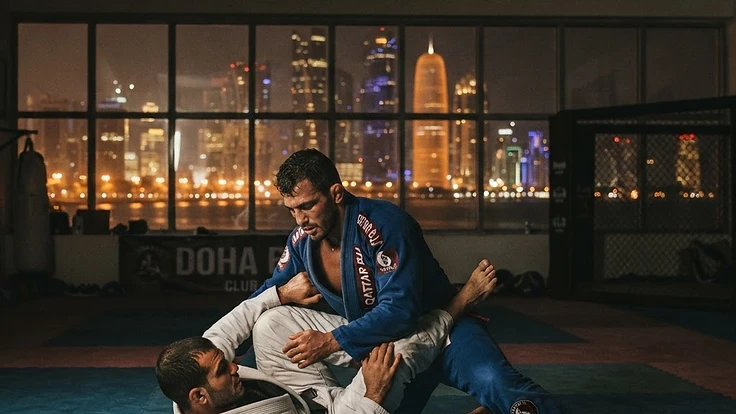
Walk through an anonymous commercial door in West Bay or Al Mirqab on any given weekday evening, and you will hear the exact same cadence: the slap of heavy vinyl mats, short gasps of air against heavy cotton lapels, and the dry squeak of bare feet scrambling for hip position. While mainstream sporting chatter in Qatar tends to focus on padel tournaments, football stadia, or running the Corniche on rare cool evenings, Brazilian Jiu-Jitsu (BJJ) has quietly built the country’s most dedicated subculture.
Grappling in the Gulf is not an accidental export. The wider region—anchored by Abu Dhabi’s decades-long investment in school curricula and global promotion through the AJP and ADCC—set the groundwork. Doha caught the wave and made it its own. From UFC Gym facilities to technical hubs like Persevere Jiu-Jitsu in West Bay and specialized programmes across Lusail, the gentle art here has moved from an expat curiosity to a core athletic pursuit for locals and international professionals alike.
The Anatomy of Doha's BJJ Gym Culture
BJJ academy cultures globally tend to swing between two extremes: old-school fight academies that grind down hobbyists, and sanitized boutique setups focused purely on retail retention. In Doha, the standard has settled into something far more functional and respectful, driven largely by elite international black belts who have relocated from Brazil, Europe, and the States.
A proper academy atmosphere is defined by what happens during sparring rounds. In healthy Doha rooms, white belts are guided rather than hazed, and upper belts manage the intensity depending on who is across from them. Because so many practitioners in Qatar are working corporate schedules in West Bay, teaching in Education City, or running businesses in Lusail, nobody can afford a fractured rib or a popped MCL on a Tuesday night. The best local mats prioritize technique, controlled pacing, and hyper-clean hygiene—an essential standard in a climate where indoor humidity and close contact can quickly compromise poorly maintained spaces.
Women on the Mat: A Defining Local Shift
You cannot talk about BJJ in Qatar without talking about the female grappling scene. Unlike many international gyms where female practitioners represent a small, isolated percentage of the room, Doha has built dedicated, culturally tailored spaces where women train seriously.
Milestones have followed. The Qatar BJJ scene made international combat sports headlines when female practitioners advanced through the ranks to black belt entirely within dedicated female programmes. Whether rolling at dedicated women-only slots or training under elite female black belts, local and expat women in Doha have embraced BJJ as an unmatched vehicle for authentic self-defence and physical conditioning. It is technical, intensely demanding, and completely separate from the sterile atmosphere of a typical cardio studio.
The Grappler's Physical Requirement: Iron Meets the Mat
Brazilian Jiu-Jitsu teaches you how to use leverage to survive against bigger opponents, but anyone who rolls regularly will tell you the uncomfortable truth: strength and durability matter. Without a stable posterior chain and bulletproof joints, four rounds of hard sparring will leave your lower back and neck wrecked.
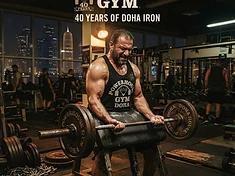
Serious grapplers in Doha split their time between mat time and dedicated strength work. For those focusing on brute force, hip hinging, and injury resilience to survive aggressive guard passers, spending complementary days doing heavy barbell work is non-negotiable. If you need a raw, no-nonsense environment for heavy structural work, View Olympia House gym on Fitseeka → to balance your mat sessions with proper loaded volume.
Conditioning for grappling is distinct from traditional cardio. It requires sudden bursts of anaerobic power followed by steady isometric holds. For athletes who want to build the explosive engine required to scramble out of side control, combining BJJ with functional training pays dividends. You can test your engine at places like View Global Gym on Fitseeka →, where the blend of functional movement and high-capacity conditioning directly mirrors tournament pace.
Navigating the Mat: How to Start in Qatar
If you are looking to tie a white belt around your waist in Doha, ditch the ego before stepping past the shoe rack. Here is how to navigate your entry into the local scene:
- Gi vs. No-Gi: Most academies offer both. Traditional Gi training teaches defensive discipline and grip strength, while No-Gi is faster and relies more on wrestling and underhooks. Try both before committing to a competition focus.
- Check the Lineage: Verify who is heading the programme. Doha has certified black belts with verified lineages under the IBJJF. Don't be shy to ask who awarded your head coach their rank.
- Drop-in Etiquette: Many academies welcome visitors, but call ahead via WhatsApp first. Respect the gym's uniform policies—some enforce plain white or royal blue gis, while others are flexible.
- Recovery Infrastructure: Grappling hard three to four days a week takes a toll. Keep an eye on your joint health, invest in regular mobility work, and make sure your baseline physique can absorb the impact. If your frame needs fundamental rebuilding before taking on heavy open mats, View Back to fit gym on Fitseeka → to lay down a protective foundation of lean muscle.
The Long Game
Jiu-Jitsu is one of the few sports where rank cannot be bought, faked, or accelerated by charisma. You either know where your hips need to be to escape mount, or you suffocate under pressure until you tap the mat. In a city characterized by luxury finishes and rapid architectural development, BJJ offers something deeply grounding: complete, undeniable reality in every five-minute round.