
At 4:15 AM on a Tuesday in November, the Doha Corniche belongs entirely to cleaning crews, stray cats, and runners staring down arbitrary numbers. Tariq Al-Mansoor is looking at 4:15. Not the hour, but the metric: 4 minutes and 15 seconds per kilometre. To run a marathon in 2 hours, 59 minutes, and 59 seconds, you have to hit that exact split forty-two times in a row without fading. Do it in Valencia or Berlin, and you deal with cool tarmac and crisp 10°C air. Do it while living in Qatar, and you must negotiate high humidity, searing summer blocks, and an endless search for uninterrupted pavement.
The Elusive Sub-3 Barrier
In amateur road running, the sub-3 marathon is the ultimate line between casual high-performance and obsessive craft. Fewer than four percent of marathon finishers worldwide ever cross beneath that three-hour mark. It demands a weekly volume of 80 to 110 kilometres, ruthless nutritional discipline, and a tolerance for sustained lactate accumulation that borders on masochism.
For Tariq, an engineer living in West Bay, the obsession started after logging a 3:18 at the Doha Marathon two years ago. “Anyone running five days a week can stumble into a 3:30 on decent grit,” Tariq says bluntly. “Sub-3 does not accept stumbling. If your aerobic threshold is off by two percent, or your electrolyte plan fails at kilometre 30, you drop to 4:45 splits and bleed out. In Doha, the climate punishes that arrogance faster than anywhere else.”
Surviving the Qatar Calendar: The Winter Window
The biggest hurdle for endurance athletes in the Gulf is not physiology—it is geography and weather. Doha offers roughly four pristine months between late November and early March. The rest of the year swings from mild warmth to blistering, air-thick summer heat where sweat refuses to evaporate off your skin.
To build a competitive engine for an autumn or winter race, Tariq had to adapt his calendar. July and August cannot be spent chasing VO2 max intervals along Lusail Marina. Instead, the heavy aerobic foundation shifts indoors or under shaded architecture:
- Oxygen Park and Education City: The sunken bowl design and shaded corridors offer relief and gentle elevation shifts when flat seafront routes become heat traps.
- Treadmill Logging: High-mileage runners in Doha inevitably learn to grind through 90-minute tempo blocks on commercial gym belts staring at blank walls.
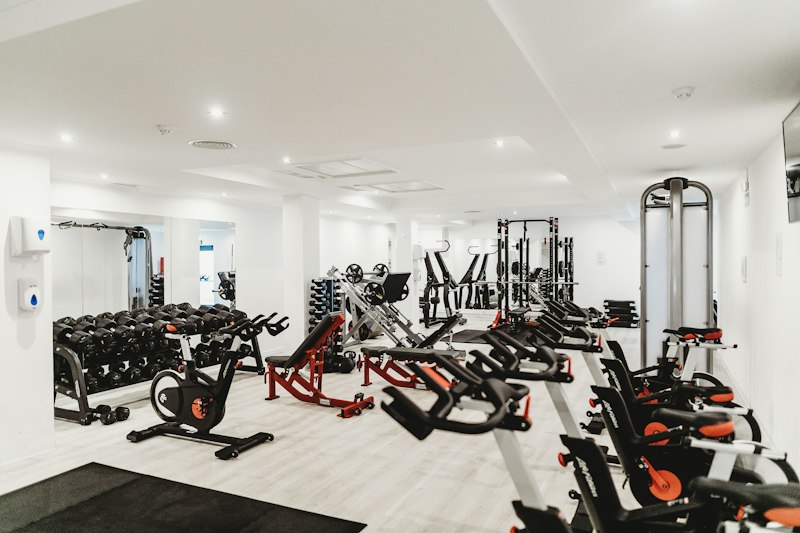
- Targeted Strength Cycles: When running outdoors threatens heat illness, runners build durability in the rack. Tariq added targeted posterior chain work at View Pulso Fitness on Fitseeka → to prepare his calves and hamstrings for the unrelenting pounding of flat pavement.
The Routes: Mapping Out 35-Kilometre Long Runs
Doha is rapidly transforming into a runner-friendly city, but connecting long mileage without halting at traffic signals requires tactical planning. Tariq’s weekend long runs—often peaking at 36 kilometres—follow precise paths to avoid stop-and-go junction delays.
The baseline route starts at Sheraton Park, following the horseshoe curve of the Corniche down past the Museum of Islamic Art, linking over toward the Old Doha Port and Stadium 974. On mornings requiring sustained threshold pace without pedestrian friction, he heads out to the Olympic Cycling Track alongside the Al Khor Road. Spanning over 33 kilometres of uninterrupted smooth surface, it has become Qatar’s unofficial testing ground for serious endurance athletes seeking pure, unimpeded split management.
For recovery days, softer surfaces take priority. The cushioned running loops at Aspire Park save joints after heavy weekend volume. While Tariq runs solo, his sister opts for women-only strength and low-impact swimming classes across the park at View Aspire Active Ladies on Fitseeka →, highlighting how sports infrastructure around Al Rayyan supports diverse training regimens.
The Fuel and Salt Equation
Running hard in Doha means sweating out immense volumes of sodium, even during the breezy winter mornings when Gulf humidity sneaks above 75 percent. Dehydration alters blood viscosity, spiking heart rates by 8 to 12 beats per minute at identical paces.
“In Europe, you can get away with taking water every five kilometres and two energy gels an hour,” Tariq explains. “Here, if you do that on a 30k workout out to The Pearl-Qatar, you end up crampy, dizzy, and walking the last three kilometres back down Lusail Expressway. You have to hyper-hydrate with 800mg of sodium per litre before you step out the door at dawn.”
His fueling strategy involves precise carb ingestion: 60 to 80 grams of carbohydrates per hour using high-fructose maltodextrin blends, paired with salt chews taken every 30 minutes like clockwork. Training the gut to absorb that volume under humid conditions took four months of trial, error, and mid-run nausea.
Conditioning Beyond the Pavement
Endurance running often strips away lean muscle mass if left unchecked. A sub-3 pursuit requires power transfer through the glutes and hips to maintain cadence when glycogen stores deplete around kilometre 34. To combat this breakdown, Tariq cross-trains twice a week.
High-intensity functional conditioning helps build anaerobic stamina that pure road miles skip. For hybrid cross-training blocks that maintain baseline core power without joint impact, many local athletes cross over into conditioning circuits at venues like View F45 Training Sports City on Fitseeka →. Tariq balances this workload with dedicated mobility work, mindful stretching, and restorative lap swimming at the View Mandarin Oriental Fitness Center on Fitseeka → in Msheireb Downtown, giving his nervous system a genuine reset between peak training blocks.
The Taper and The Verdict
Two weeks out from race morning, the hard work is logged. The 32km long runs on the Corniche are finished. The 1,000m repeats around Education City are in the books. All that remains is holding the pace when the gun goes off.
Running sub-3 in Doha is not romantic. It means sacrificing your Thursday nights, drinking water constantly, waking up while the rest of the peninsula is asleep, and fighting an endless battle against ambient heat. But when Tariq steps across the timing mat, taps his watch at 2:58:41, and looks out over the Arabian Gulf, every 4:15 AM alarm becomes worth it.