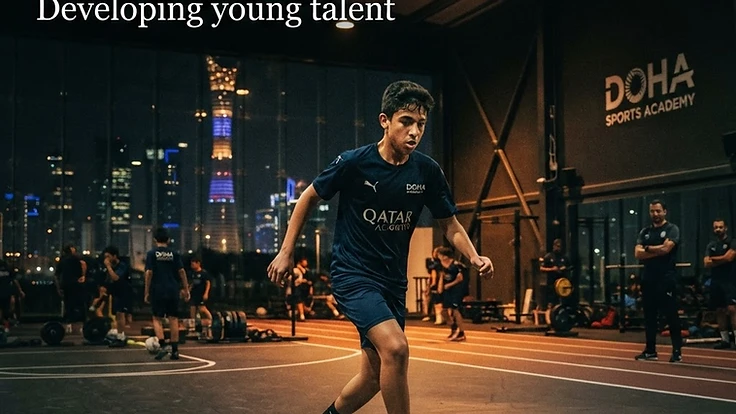
Youth sports development in Qatar is often misunderstood. Outside the country, people see the massive infrastructure of the Aspire Zone or glossy stadiums in Lusail and assume youth success is simply a matter of endless capital. It is not. Money builds pitches, but it does not run five-kilometre repeats in August humidity, nor does it teach an eleven-year-old proper hip mobility or emotional resilience under competitive stress.
Doha has evolved into one of the most sophisticated sports incubation hubs on the planet. From grassroots community programmes in Al Mansoura and Education City to national scouting networks feeding directly into Aspire Academy, the youth pathway here operates on a deliberate, sports-science-backed blueprint. If you are a parent raising an aspiring athlete, or an athlete looking at the coaching mechanics behind Qatar’s next generation of competitors, here is what actually happens on the ground.
The Dual Reality: Grassroots vs National Pathways
Doha's youth training ecosystem is split into two distinct tiers: the private commercial sector and the national federations. Understanding the gap between them matters.
On one side are private academies operating across The Pearl, West Bay, and Al Sadd, catering to thousands of expat and local children playing football, padel, basketball, and swimming. Many do solid technical work; others are little more than air-conditioned daycares with branded cones. On the other side sits the federated pathway, anchored by Aspire Academy in Baaya, which scouts over 4,000 children annually through school tournaments and club fixtures.
The bridge between both is widening in quality. Today, private setups in Doha increasingly adopt European Long-Term Athlete Development (LTAD) frameworks rather than running repetitive scrimmage drills that lead to early burnout. The goal is no longer just winning an under-12 tournament on a Friday morning in Al Wakrah; it is preserving joint integrity, establishing movement competency, and nurturing genuine tactical IQ.
Coaching Methodology: Killing Early Specialisation
The single biggest mistake youth coaches make globally—and one Doha had to actively unlearn—is early sport specialisation. Forcing an eight-year-old to play only football or tennis twelve months a year produces repetitive strain injuries and psychological exhaustion before puberty hits.
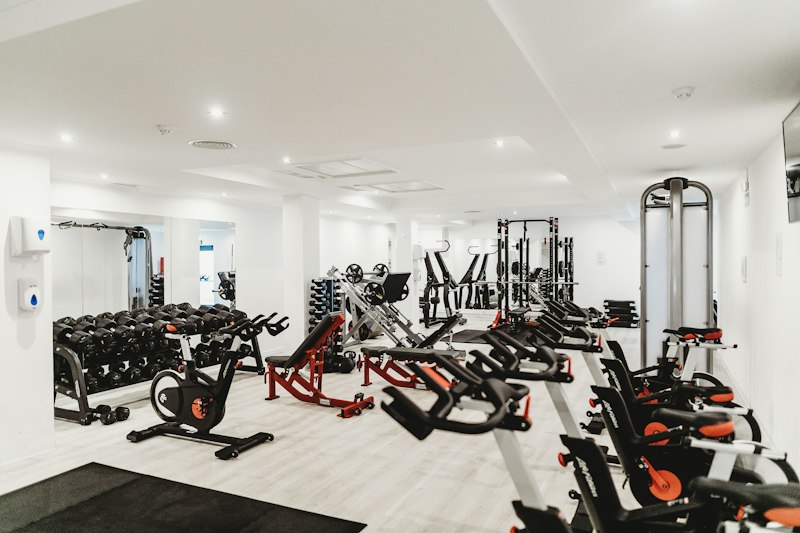
Top coaches in Doha now build general physical literacy first. That means before a kid touches a specific playbook, they learn rotational power, bilateral jumping mechanics, acceleration, and decelerative braking. For older teens needing focused strength work, community strength facilities like View MY GYM Sports on Fitseeka → provide the heavy barbell literacy—squatting, hinging, and bracing—that protects knees and ankles when match intensity spikes.
Coaches working in high-performance Doha setups structure the calendar into clear phases:
- Ages 6 to 9 (Fundamental Phase): Agility, balance, coordination, spatial awareness, and multidirectional play across multiple sports.
- Ages 10 to 13 (Learning to Train): Structured sport-specific techniques, aerobic base building, and basic bodyweight mechanics.
- Ages 14 to 17 (Training to Compete): High-volume resistance training, advanced tactical periodisation, and mental conditioning under match pressure.
The Environmental Hurdle: Training Through Doha Summers
You cannot talk about youth development in the Gulf without addressing the climate. From late May through September, outdoor field training between 8:00 AM and 6:00 PM is off the table. Academies that survive and thrive have adapted by shifting their training models indoors.
Elite programmes move into climate-controlled indoor halls like the Aspire Dome or school facilities across Education City. But indoor training changes the athletic stimulus. Hard court surfaces increase ground reaction forces compared to natural grass, putting extra torque on adolescent patellar tendons and hips. Smart coaches modify their plyometric volume accordingly.
Many academies supplement summer pitch limits with metabolic conditioning, mobility, and functional movement classes indoors. High-output athletic facilities like View Pulso Fitness on Fitseeka → mirror the high-cadence, functional endurance work required to keep athletes conditioned without cooking them under a 45-degree sun.
Sports Science and the Role of Aspetar
What separates Doha’s development system from almost anywhere else in the Middle East is the immediate proximity of world-leading sports medicine. With Aspetar located right alongside the training pitches in the Aspire Zone, youth talent here is monitored with clinical precision.
Growth spurts are not treated as an afterthought; they are tracked through peak height velocity (PHV) assessments. When a 13-year-old athlete undergoes rapid skeletal growth, their muscle tendon units tighten and coordination temporarily degrades. In an untrained environment, a coach yells at them for looking sluggish. In Doha’s top academies, their training load is immediately recalibrated to prevent apophysitis conditions like Osgood-Schlatter or Sever's disease.
Parents of young athletes often complement this development by training alongside them in structured family-friendly venues. Parents looking for athletic, functional group environments nearby often head to View F45 Training Sports City on Fitseeka →, maintaining their own conditioning while their kids clock development hours nearby in the Sports City district.
The Academic-Athletic Balance
One of the toughest operational problems in Doha is school scheduling. International and independent schools across Doha finish between 1:30 PM and 3:00 PM, followed by heavy academic loads, tutoring, and Doha traffic along the expressway corridors from Lusail to Al Rayyan.
If an academy expects an athlete to train five days a week without coordinating their sleep, recovery, and nutrition, performance crashes by term two. Elite programmes tackle this through dedicated student-athlete agreements, ensuring coaches communicate with academic faculties. Recovery protocols—once reserved for senior national squads—are now taught to 15-year-olds. This includes deliberate sleep hygiene, hydration protocols adjusted for the local dew point, and access to contrast therapy, swimming lanes, and guided mobility sessions such as those offered at the View Mandarin Oriental Fitness Center on Fitseeka → in Msheireb.
What to Look For in a Doha Youth Academy
If you are evaluating sports academies in Doha for your own child or an athlete you mentor, ignore the kit design and social media highlight reels. Look at the operational realities:
- Coach Credentials: Are lead coaches certified by recognised governing bodies (e.g., AFC/UEFA, World Athletics, ASCA) or are they enthusiastic amateurs?
- Injury Management: What is their return-to-play protocol after an ankle sprain or concussion? If they do not have one, walk away.
- Long-Term Philosophy: Do they play everyone to develop technical comfort, or do they bench half the squad just to win a weekend medal in a private league?
- Load Management: Do they assess whether an athlete is playing for both school and club in the same 48-hour window? Overuse injuries among Doha teens are skyrocketing because nobody tracks total weekly pitch minutes.
Building high-performing athletes is not about hype or high-tech gimmicks. It is about consistent technical fundamentals, competent coaching, proper load management, and respecting the developmental timeline. Doha has the infrastructure to create world-class athletes; the programmes that succeed are the ones disciplined enough to let that process unfold one training session at a time.