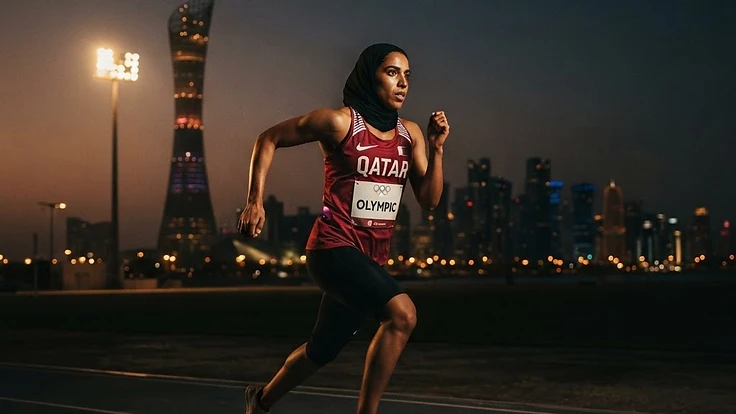
Building Champions from the Ground Up
When Mutaz Essa Barshim cleared 2.37 metres to take Olympic gold in Tokyo, the world saw an iconic moment of athletic brotherhood. What the television cameras missed were the decades of precise biometric monitoring, clinical load management, and sports science that carried him there from Al Rayyan. Qatar's Olympic success is neither accidental nor bought off the shelf. With a citizen population smaller than many European regional hubs, the country operates one of the most efficient, hyper-engineered athlete development pipelines anywhere on the planet.
At the center of this machine sits Aspire Academy, established in 2004 under the shadow of Khalifa International Stadium. Together with the Qatar Olympic Committee, Aspire built the Athlete Development Pathway (ADP)—a framework of 39 sport-specific models designed to take a child from elementary physical literacy all the way to an Olympic podium.
The Talent Funnel: Bronze to Gold
Most countries rely on chance: a kid joins a club, gets noticed by a dedicated coach, and claws their way up through chaotic amateur circuits. Qatar cannot afford that luxury. The domestic talent pool is tight, which means the evaluation process must be clinical.
Every year, through the Schools Olympic Program (SOP), scouts assess tens of thousands of school children across Qatar. The talent identification model runs through a deliberate three-tier funnel:
- Bronze Phase: Universal testing in schools across Doha, Al Wakrah, and Al Khor. Scouts assess basic biometric indicators: peak height velocity, reactive ability, power-to-weight ratios, speed, and agility.
- Silver Phase: The top performers are clustered into regional talent centres for specialized physical profiles. This weeds out early bloomers from athletes with genuine biological ceilings.
- Gold Phase: The top fraction attends an intensive assessment camp at Aspire Dome. Here, coaches ignore the stopwatch and scrutinize psychological resilience, coachability, work ethic, and motor learning speed under fatigue.
The athletes who make it through aren't merely enrolled in after-school practice. They enter a full-time residential ecosystem balancing accredited schooling with international competition, supervised biomechanics labs, and clinical nutrition.
The Ecosystem: Science, Rehab, and Aspetar
Raw talent without infrastructure breaks down. The true engine behind Qatar's Olympic track record is the integration between Aspire Academy and Aspetar, the world-renowned sports medicine hospital situated right next door. If a junior sprinter shows micro-tears in a hamstring or asymmetrical torque across their kinetic chain, motion-capture analytics and MRI diagnostics intervene before a catastrophic tear occurs.
Global soccer clubs fly into Doha every winter precisely to access this corridor. But while Aspetar caters to the professional elite, the methodology has filtered into the everyday fitness scene in Doha. The concept of periodization—treating recovery, tissue resilience, and structural balance with the same discipline as peak lifting sessions—is no longer reserved for national team representatives.
Translating Olympic Science to Your Personal Routine
You don't need a national sports science laboratory to stop training like an amateur. The typical Doha fitness trap is predictable: go all-out for six weeks at a random bootcamp in West Bay, blow out a hip flexor or rotator cuff, take two months off, and start again from zero. That is the antithesis of the Aspire philosophy.
If you want to adopt the fundamentals that drive Qatar’s elite athletes, start with these structural shifts:
- Respect Periodization: Divide your training year into blocks. Build an aerobic and connective tissue base first, then layer on maximal strength, followed by sport-specific intensity.
- Data Over Ego: Elite programs monitor resting heart rate, sleep quality, and power output. If your central nervous system is fried from high summer heat or work stress in Msheireb, an aggressive 1RM deadlift session will only set you back weeks.
- Fix Asymmetries First: Qatar's athletic development system focuses on multi-sport physical literacy before specialization. If you sit at a desk in Lusail for ten hours, jumping straight into high-volume ballistic movements is reckless. Fix your hip mobility, core bracing, and ankle dorsiflexion first.
Where to Train with Elite Standards in Doha
Fortunately, you don't need an invitation to the Olympic village to find high-standard coaching, Olympic barbells, and data-driven training regimens in Doha. Several facilities across the city are run by coaches who reject gimmicks in favor of genuine strength and conditioning.
For serious functional output, metabolic conditioning, and structured barbell cycles, View CrossFit Aspire on Fitseeka →. Located right at the heart of Qatar's sporting hub, it delivers the raw intensity and programming rigor required to build real work capacity.
If your goals are centered on raw power, progressive overload, and high-performance biomechanics, Al Rayyan is also home to View Spartans Elite Fitness Gym on Fitseeka →. This is an environment stripped of commercial distractions, dedicated to pure athletic strength development.
For structured hybrid conditioning, Hyrox-style intervals, and intelligent cross-training that combines Pilates with functional strength, View Pulso Fitness on Fitseeka → offers a balanced, high-performance training floor in Doha.
Women seeking an all-round development environment—spanning dedicated lane swimming, high-cadence group classes, and targeted recovery work—can plug directly into the Aspire Zone infrastructure at View Aspire Active Ladies on Fitseeka →.
The Long Game
Qatar's Olympic athletes don't rely on hype or sporadic motivation. Mutaz Barshim’s gold medal and the national team's international titles were forged through decades of consistent, unglamorous adherence to physiological fundamentals. If you want sustainable fitness in Doha, abandon the seasonal 30-day crash diets and train for longevity: track your progress, build your structural foundation, and respect the process.