A torn hamstring during an evening sprint along the Corniche or a tweak in your lumbar spine during a heavy deadlift at your local box can bring your fitness routine to a sudden stop. The default reaction for most people in Qatar is to rest for three weeks, take anti-inflammatories, and hope the issue goes away on its own. It rarely does. When you jump straight back into training, the pain usually returns within forty-eight hours.
Doha's sports medicine ecosystem has evolved into one of the most clinically capable in the region. Between elite centres like Aspetar setting global standards for orthopedic rehabilitation and private practices serving everyday athletes, you no longer have to settle for generic heat packs and passive rest. Navigating sports physiotherapy in Qatar requires understanding clinical approaches, knowing the right questions to ask, and executing a structured return to high-intensity training.
The Pitfalls of Passive Rehabilitation
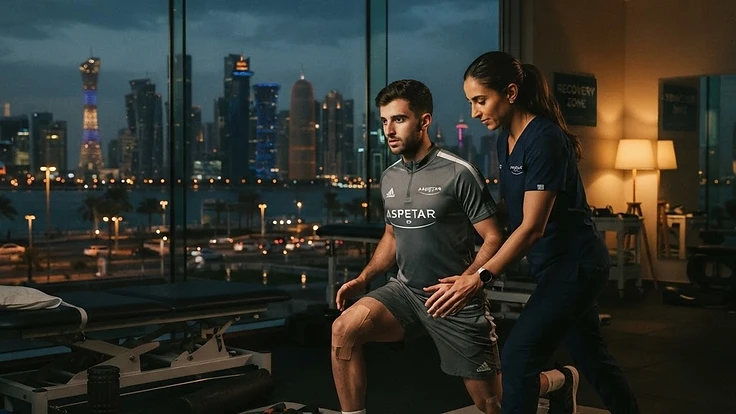
Far too many private clinics still treat athletic injuries with passive modalities: ultrasound wands, infrared lamps, and ten minutes of gentle stretching. While soft tissue release and manual joint mobilisations have their place in acute pain management, they do not restore tissue capacity. A muscle or tendon needs progressive mechanical loading to rebuild tensile strength.
True sports rehabilitation follows a diagnostic and progressive loading model:
- Objective Assessment: Identifying not just where it hurts, but the biomechanical dysfunctions—such as poor ankle dorsiflexion, hip asymmetries, or core instability—that caused the breakdown.
- Load Management: Modifying your training stimulus instead of immobilising you completely. True bed rest is almost always counterproductive.
- Targeted Hypertrophy and Strength: Rebuilding the injured tissue through controlled isometric, eccentric, and concentric contractions.
- Sport-Specific Return-to-Play: Testing dynamic deceleration, plyometric tolerance, and rotational stability before clearing you for unrestricted movement.
Navigating Doha's Physio Landscape
Doha hosts an array of specialized sports therapy facilities, ranging from multidisciplinary clinics like DOC Medical Center, International Physiotherapy Centre, and American Hospital Clinics, up to specialized surgical and rehab hospitals. When you are booking a consultation in West Bay, Lusail, or Al Waab, clinical background matters.
You want a physiotherapist who understands your sport. If you spend your weeks chasing Hyrox splits at a performance facility like View Pulso Fitness on Fitseeka →, a practitioner who tells you to stop lifting heavy forever is not the right fit. You need a clinician who assesses your movement, calculates your weekly volume, and provides a structured loading protocol that keeps you moving safely while you heal.
The Qatar Climate Factor: Tendons, Heat, and Tissue Dehydration
A frequently overlooked factor in Doha's athletic injury rate is the climate. When athletes shift between air-conditioned indoor spaces and outdoor sessions around Education City or Aspire Park, thermal and hydration demands spike dramatically.
Chronic dehydration accelerates tendon stiffness and decreases muscular elasticity. In Doha's extreme summer heat, fluid and electrolyte deficits compromise cellular recovery between sessions. Tendons already receive limited blood flow compared to skeletal muscle. Combine chronic under-hydration with high-volume sprint or jumping sessions, and issues like Achilles tendinopathy and patellar tracking pain will escalate rapidly. A skilled local physiotherapist will factor your hydration habits, environmental shifts, and recovery sleep directly into your rehab programme.
Bridging the Rehab-to-Performance Gap
The danger zone for reinjury is the space between feeling painless in daily life and operating at match-pace or maximal heart rate. Just because your knee no longer hurts going down the stairs at Msheireb Downtown doesn't mean your patellar tendon is ready for fifty box jumps.
Smart recovery requires controlled exposure. High-intensity group workouts, such as the sessions at View F45 Training Sports City on Fitseeka →, demand rapid directional changes and high neuromuscular endurance. Before jumping back into full-throttle intervals, work with your physio to introduce multi-planar hops, sled pushes, and sub-maximal tempo runs. If your therapist gives you a clean bill of health without testing your dynamic stability under fatigue, get a second opinion.
Integrating Active Recovery and Controlled Environments
Recovering from an injury does not mean sitting on the couch in The Pearl watching television. Cardiovascular fitness degrades quickly without stimulation, which makes returning to your sport harder on your tendons and ligaments later on.
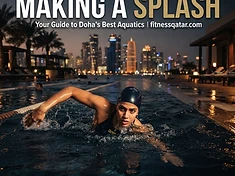
Low-impact modalities provide the aerobic stimulus your heart and lungs need without stressing injured joints. Hydrotherapy, swimming, and controlled reformer work are exceptional bridge options during mid-phase rehab. Facilities like the View Mandarin Oriental Fitness Center on Fitseeka → offer private, controlled environments ideal for non-impact cardiovascular maintenance and restorative flexibility work. Similarly, women seeking guided low-impact movement, functional rehabilitation, and swimming in Al Rayyan can leverage dedicated spaces like View Aspire Active Ladies on Fitseeka → to stay active without overloading vulnerable tissues.
Questions to Ask Your Physio Before Starting
Do not be a passive patient. You are paying for clinical expertise, and you should demand a transparent plan of attack. At your initial evaluation, ask these four questions:
- What specific tissue is compromised, and what is its biological healing timeline? (If they cannot pinpoint the involved structure, their diagnosis is incomplete.)
- What can I continue to train? (A good sports physio will tell you what exercises are green-lit, keeping you moving rather than shutting everything down.)
- What concrete metrics dictate my return to sport? (You want objective milestones, such as matching limb symmetry within 10% on a dynamometer, rather than just waiting for the pain to stop.)
- What caused the issue originally? (Treating the symptom without fixing the underlying movement defect guarantees another flare-up in six months.)
The Bottom Line
Injuries are an inevitable tax on an active lifestyle, but prolonged recovery doesn't have to be. Doha is equipped with world-class medical resources and premium training spaces designed to get you moving again. Stop relying on rest and ice packs. Find a physiotherapist who understands loading, demand an objective roadmap, and treat your rehabilitation with the same discipline you bring to your training.